It’s interesting how small changes at home can really make a difference when you’re trying to feel less stressed. Maybe it’s setting up a cozy corner, using calming scents, or having a playlist ready for when things get overwhelming. The thing is, finding what works for you isn’t always straightforward. Have you ever thought about creating a simple toolkit to help manage stress anytime? It might be easier than you think to create a space that helps you breathe.
The Essentials
- Create a dedicated Calm Corner with cozy seating, soft textiles, plants, and adjustable lighting to promote relaxation.
- Use aromatherapy with diffusers and essential oils like lavender or citrus to enhance mood and reduce stress.
- Incorporate soothing sounds, nature visuals, and guided relaxation videos for calming sensory experiences.
- Practice quick mindfulness and breathing exercises, such as deep inhales and exhales, to manage daily stress.
- Include evening routines like gentle yoga, stretches, and mindful breathing to unwind and improve sleep quality.
Creating Your Calm Corner
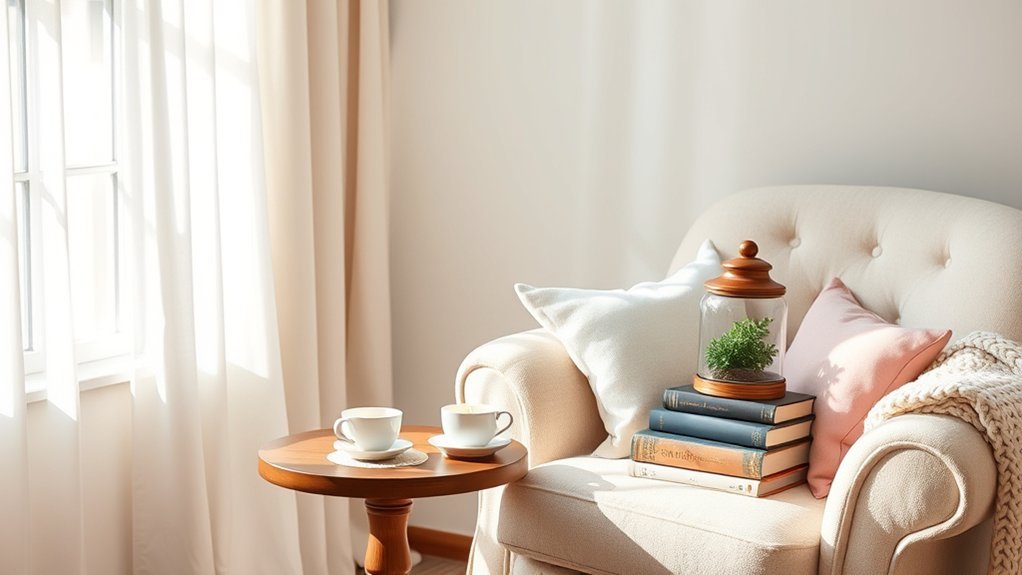
Sometimes, creating a calm corner is just about carving out a small space where you can breathe. You might start by finding a corner that feels separate, away from noise or clutter. Add cozy seating—maybe a soft armchair or a comfy bean bag—something that makes you want to settle in. Think about decorating with a few plants; those little green touches add life and a sense of peace. Don’t overthink it. It’s not about making it perfect but making it inviting. Do you really need a bunch of fancy stuff? Sometimes, simple is better. Just find what comforts you. This corner isn’t about anyone else. It’s about giving yourself a spot to unwind—just a little sanctuary you can call your own.
Aromatherapy and Essential Oils
If you want to add a little peace to your day, aromatherapy and essential oils might help. These therapeutic scents can boost your mood and reduce stress. With the right diffuser techniques, you can fill your space with calming blends that promote relaxation. Using scent combinations thoughtfully creates a personalized atmosphere that eases tension. You might try lavender or chamomile for stress relief, or citrus for a mood boost.
Here are some simple ways to get started:
- Use a diffuser with your favorite calming blends
- Apply oils directly to your skin with a carrier oil
- Mix scent combinations in a spray or roller for quick use
Are you curious to find the perfect aromatherapy practices for your relaxation?
Relaxing Audio and Visuals
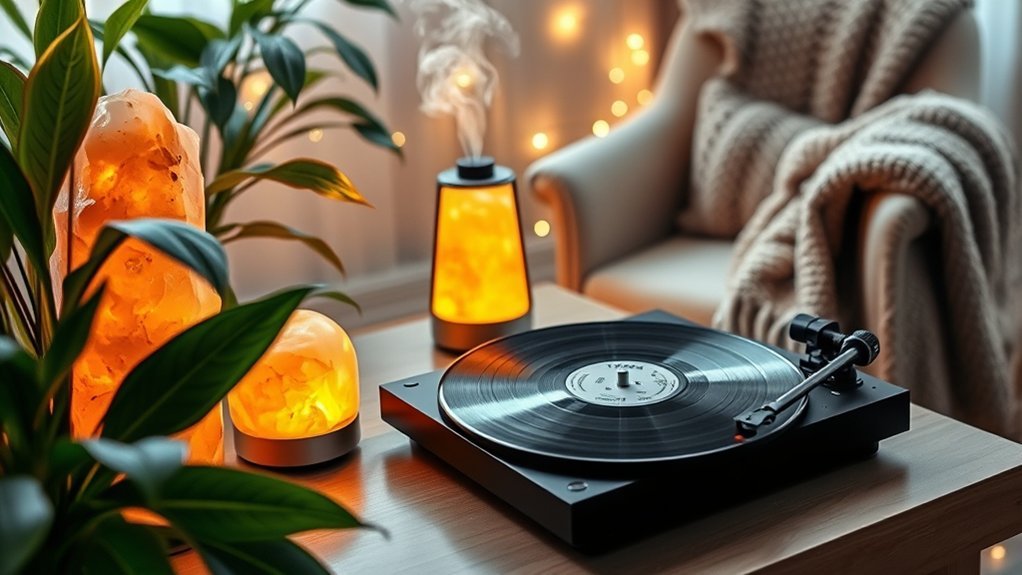
Have you ever noticed how simply listening to nature sounds or watching calming visuals can make a difference? Maybe you play forest recordings or find videos with peaceful scenes that resonate with you. Do these little moments make it easier to relax or clear your mind?
Nature Soundscapes
Nature soundscapes are like a revitalizing change for your mind. They bring you into a state of nature immersion that can really reduce stress. Whether it’s the gentle crash of ocean waves, bird songs at dawn, or the soothing fall of rain sounds, these natural noises create tranquil environments.
Here are some ideas to engage with sound therapy:
- Listen to nature playlists that feature rain, forest sounds, or ocean waves.
- Practice outdoor meditation or mindfulness walks surrounded by these sounds.
- Try forest bathing or simply spend time in your garden, focusing on the ambient noises.
These sounds can help you get out of your head and into the present moment. Do you notice how certain sounds relax you more? Maybe it’s time to create your own nature playlist or outdoor retreat.
Soothing Visuals Displays
Sometimes, just changing what you see can make a big difference. You can experiment with color palettes that soothe your mood—soft blues, gentle greens, or warm earthy tones. Choosing the right image selection matters too; nature photography or scenery art can bring calm into any space. Hanging wall displays or digital backgrounds with visual harmony create a balanced atmosphere. Lighting effects, like softer bulbs or dimmable options, subtly enhance the visuals. Visual journaling or arranging your own art therapy projects helps you connect with what feels comforting. Have you tried mixing different kinds of visual stimuli? Maybe a series of calming scenery art or subtle light patterns? Playing around with these visual displays might just help you find a grounding routine, even on stressful days.
Meditation Video Selections
Switching up what you watch during your quiet moments can really set the whole mood. Meditation video selections with relaxing visuals and guided practices can help you unwind more effectively. When choosing these, keep in mind:
- Focus on meditation techniques that suit your style, like breathing or body scans.
- Look for guided practices that are easy to follow, especially if you're new to meditation.
- Pick videos with calming visuals, such as nature scenes or gentle movements, that help ease your mind.
These videos can deepen your relaxation and make your quiet time more meaningful. Do you tend to prefer audio-only or visuals? Trying different styles might surprise you. Finding what relaxes you most is part of the journey.
Mindfulness and Breathing Exercises
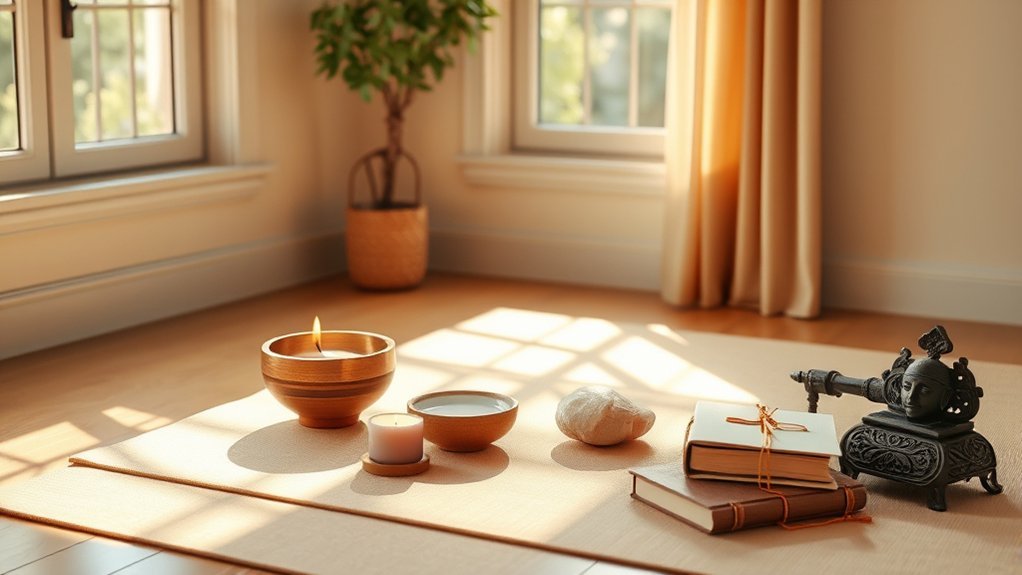
When everything feels overwhelming, taking a few deep breaths can really help ground you. Try focusing on your breath—inhale slowly, then exhale just as gently. It’s simple but effective. You might find mindful journaling useful, writing down what’s on your mind to clear mental clutter. Guided imagery also works well—close your eyes and picture a peaceful place, focusing on the details. Breathing exercises combined with these techniques can reduce stress fast. Do you notice your tension easing? Can visualizing calm help you feel more in control? Sometimes, just pausing to breathe and connect with yourself makes a difference. These quick tools are always there for you, ready to help when chaos hits and you need a moment to reset.
Comfortable and Inviting Spaces
Creating a space you find comfortable and inviting can make a big difference when you're feeling stressed. Think about adding cozy textiles like soft blankets or plush cushions—things that instantly make your space feel warmer. Next, incorporate ambient lighting, maybe a bedside lamp or fairy lights, to soften harsh shadows and create a calming mood.
Here are a few ideas:
- Use throws and pillows in inviting textures,
- Add adjustable lighting options,
- Keep clutter out of sight to promote calm.
Do you notice how small details shift your mood? Maybe it’s the way a blanket feels or the gentle glow of a lamp. These little touches matter—because your environment is part of your stress relief toolkit.
Calming Activities and Hobbies
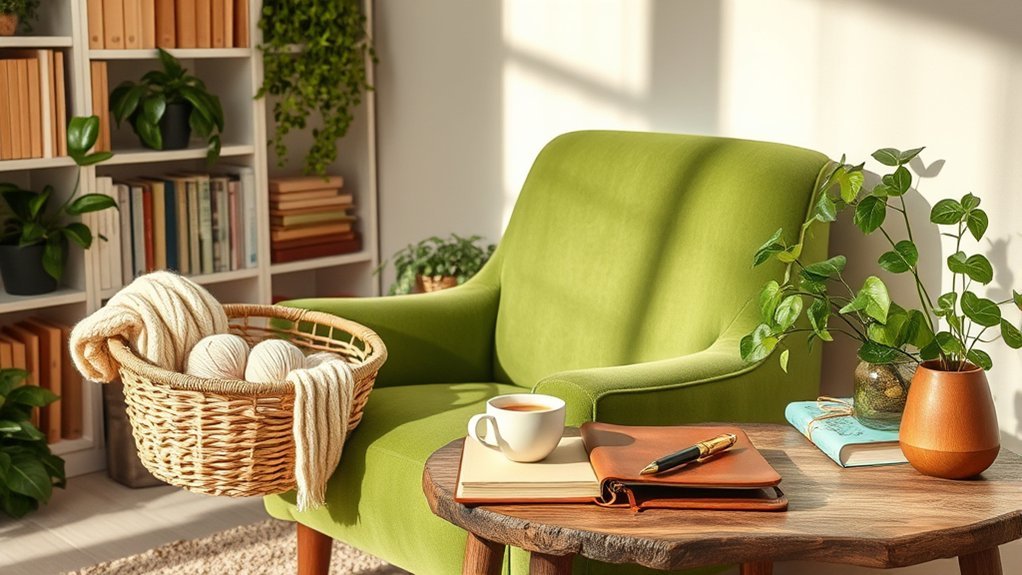
Sometimes, doing a calming activity or hobby can really help reset your mood. Like, grabbing a crafting journal and jotting down your thoughts or doodles can be surprisingly soothing. It gives you a moment to pause and breathe. Creative painting is another great option—you don’t need to be Picasso, just letting colors flow can calm your mind. These hobbies aren’t about perfection; they’re about expression and distraction. What happens if you spend fifteen minutes doing something creative? Does it make the stress feel a little lighter? Maybe it’s the focus, or just the act of doing something tangible. Whatever it is, these activities can become little escapes, moments of peace amid a busy or tense day. You might find that, sometimes, the simplest hobbies do the most good.
Simple Self-Care Rituals
Starting your day with a quick moment of mindfulness can set a calm tone, even if it’s just taking a few deep breaths before getting out of bed. You might also find it helpful to pause during the day for breath breaks, especially when deadlines feel overwhelming. And in the evening, gentle stretches could help you unwind—do you notice how your body feels after a few minutes of slow movement?
Morning Mindful Moments
When you wake up in the morning, taking just a few minutes to center yourself can really set the tone for the whole day. Try starting with some mindful breathing, focusing on each inhale and exhale. It’s a simple way to clear your mind. Then, grab your gratitude journal and jot down three things you're thankful for—big or small. It shifts your mood and helps you notice the good stuff around you. Finally, pause for a moment and breathe deeply again, letting that sense of calm settle in. Repeat this routine whenever you need a quick reset. Ever wonder how just a few mindful practices can change your entire day? Sometimes, small moments create the biggest shifts.
Breath Breaks Throughout
You might find that taking a quick breath break during your day can make a surprising difference. Using simple breath techniques, like deep inhales through your nose and slow exhales through your mouth, can really help with stress reduction. Whenever you feel overwhelmed or distracted, pause for just a moment. Focus on your breathing—don’t overthink it, just notice it. It might be as easy as counting to four as you breathe in, then slowly counting to four as you breathe out. These small pauses break up your busy moments and refocus your mind. Did you know that even a couple of minutes of mindful breathing can lower your cortisol levels? It’s not about long sessions, but consistency. How often could you slip in these little breath breaks?
Gentle Evening Stretches
Evenings can be a good time to wind down, especially if you give yourself a moment to stretch gently. Trying a short gentle yoga routine helps signal to your body that it’s time to relax. Maybe start with simple stretches that focus on your neck, shoulders, and back.
Here are some ideas:
- Gentle neck rolls to release tension.
- Shoulder shrugs to ease stiff muscles.
- Cat-cow stretches to lengthen your spine.
These stretches encourage evening relaxation and ease any daily stress you’re holding onto. You don’t have to hold each pose long—just enough to feel a bit more loosened up. It’s about calming your mind and body, readying yourself for a restful night. Do you feel how a few minutes can make a difference?
Frequently Asked Questions
How Often Should I Update My Stress-Relief Toolkit?
You should regularly review your stress management strategies and update your toolkit essentials every few months to guarantee they stay effective. Keep adapting to new challenges and try new techniques to maintain ideal stress relief and emotional balance.
Can Children Benefit From Using the Home Toolkit?
Children can benefit greatly from your home toolkit, especially through activities like children's mindfulness exercises and creative activities, which help them manage stress, build resilience, and develop emotional regulation skills effectively in a supportive environment.
Are There Any Safety Concerns With Essential Oils?
You should always consider potential essential oil toxicity and guarantee safe application, especially around children. Keep oils out of reach, dilute properly, and consult experts to prevent adverse reactions from improper use.
How Can I Maintain Motivation to Use My Toolkit Regularly?
To stay motivated and build habits, set clear goals, track your progress, and incorporate small, consistent routines. Use motivational strategies like rewards and reminders, making your toolkit a regular, enjoyable part of your stress management.
What Are Affordable Ways to Create a Calming Environment?
You can create a calming environment affordably by painting walls in calming colors and adding soothing scents like lavender or vanilla through candles or diffusers. These simple choices help promote relaxation and reduce stress daily.
Final Thoughts
Building your own calm space isn’t perfect, and that’s okay. Sometimes, it’s just about trying a new breathing exercise or lighting a calming candle. You might find that small routines, like a quick yoga stretch or listening to soft music, really help you unwind. It’s all about what feels right for you. So, do you think creating this little sanctuary could fit into your day? Maybe just experiment and see.