If your living room has no overhead light, you might wonder how to make it feel brighter without just adding more lamps everywhere. It’s about layering—using floor lamps, table lamps, maybe even some wall sconces if possible. But where should you place them? And can mirrors really help? It’s not just about throwing in more light; it’s about thinking how to reflect and amplify what’s there already. Want to try something different?
The Essentials
- Incorporate floor and table lamps to add layered, ambient, and task lighting without overhead fixtures.
- Use mirrors opposite windows or lamps to reflect natural and artificial light, making the room appear brighter.
- Choose light-colored walls, decor, and reflective surfaces to enhance brightness and bounce light around the space.
- Maximize natural light with strategic window treatments like light diffusion curtains and high-hung blinds.
- Add accent and task lighting, such as reading lamps and spotlights, to illuminate specific areas and create a warm, inviting atmosphere.
Incorporate Floor and Table Lamps for Layered Lighting
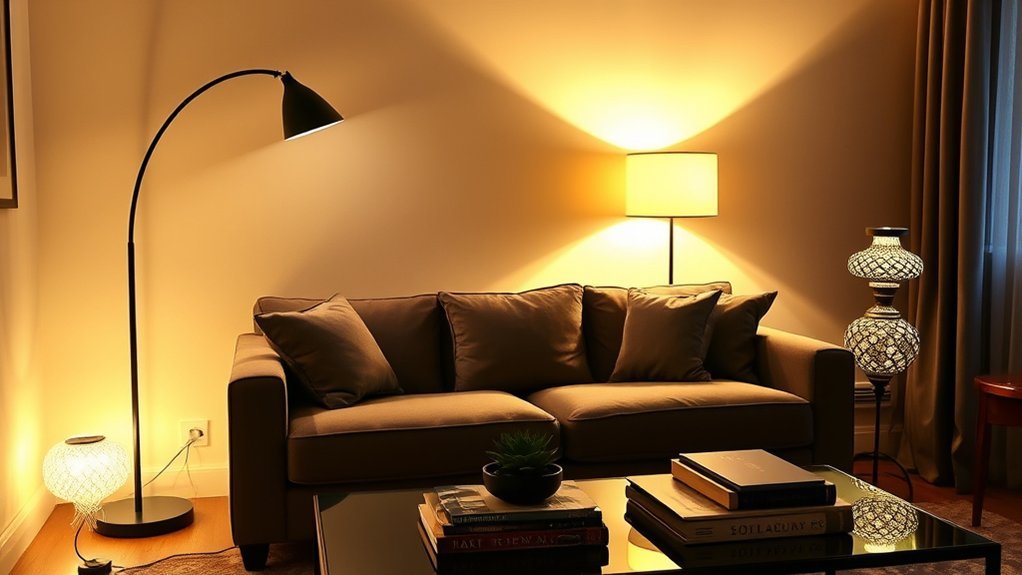
Lighting can really change how a living room feels. Using floor and table lamps is a simple way to add layered lighting without an overhead fixture. Think about lamp placement—placing a tall floor lamp near your sofa creates ambient lighting that fills the space softly. A table lamp on a side table offers focused light for reading or relaxing. Don’t be afraid to mix different styles or heights; it makes the room more interesting. Sometimes, you might want a lamp behind a chair or near the corner to avoid harsh shadows. Do you want a cozy vibe or bright enough to work? Adjusting the placement of your lamps can do that. It’s about creating a balance that feels natural and inviting.
Use Mirrors to Reflect and Amplify Light
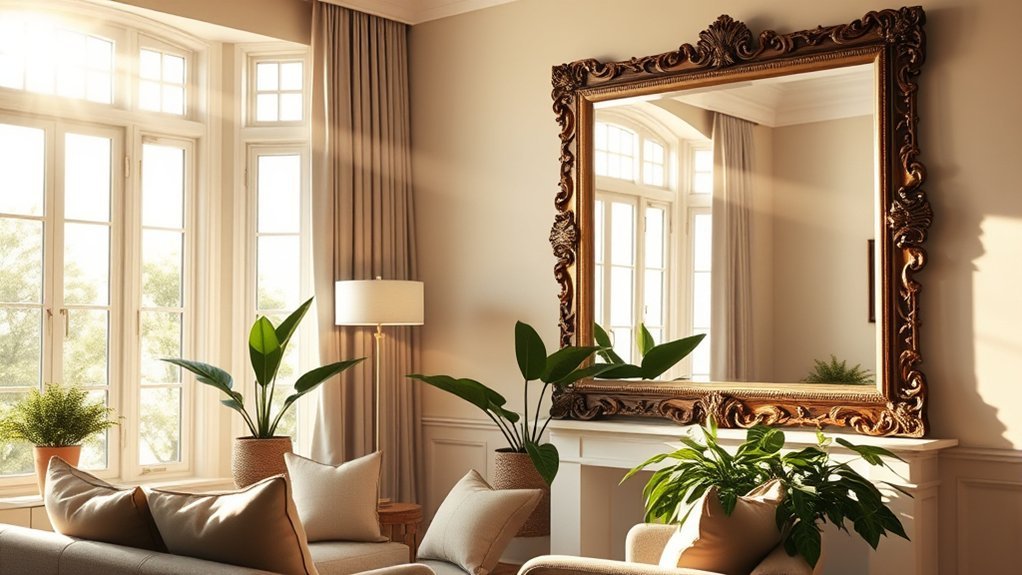
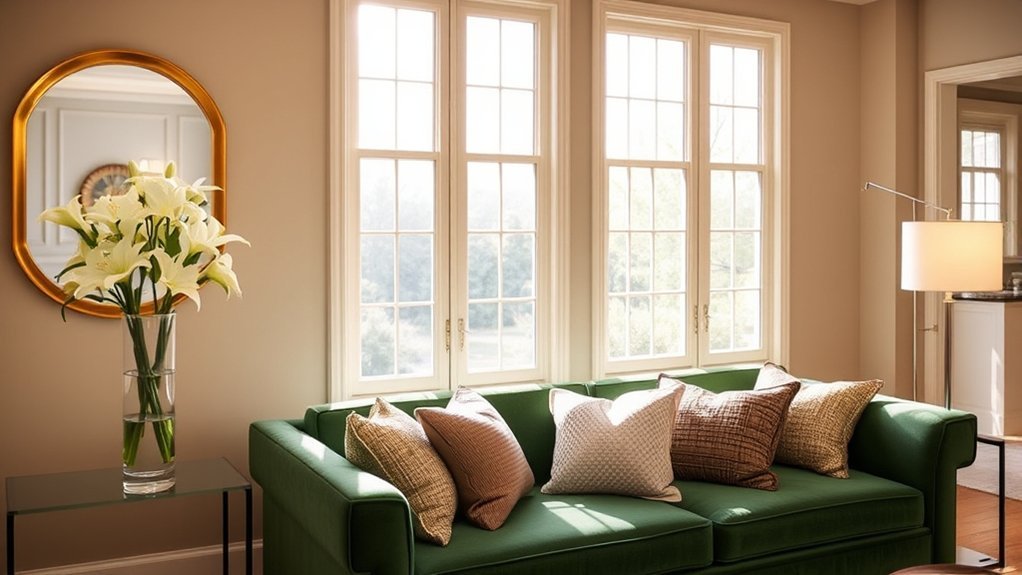
Mirrors are a surprisingly simple tool to make your living room feel brighter and more spacious. The key is mirror placement—think about where you position them. You want to reflect light, so placing a mirror opposite a window or a lamp works well. Light angles matter too; a well-angled mirror can bounce light across the room, spreading it out more evenly. Sometimes, a large mirror leaning against a wall can catch and amplify any available light. Have you noticed where your room feels dimmest? That’s where a mirror can help most. Just be mindful of glare or reflections that might be distracting. It’s about creating a balance—reflecting enough light without overwhelming the space. Sometimes, small tweaks make a surprising difference.
Choose Bright and Light-Colored Decor to Enhance Brightness
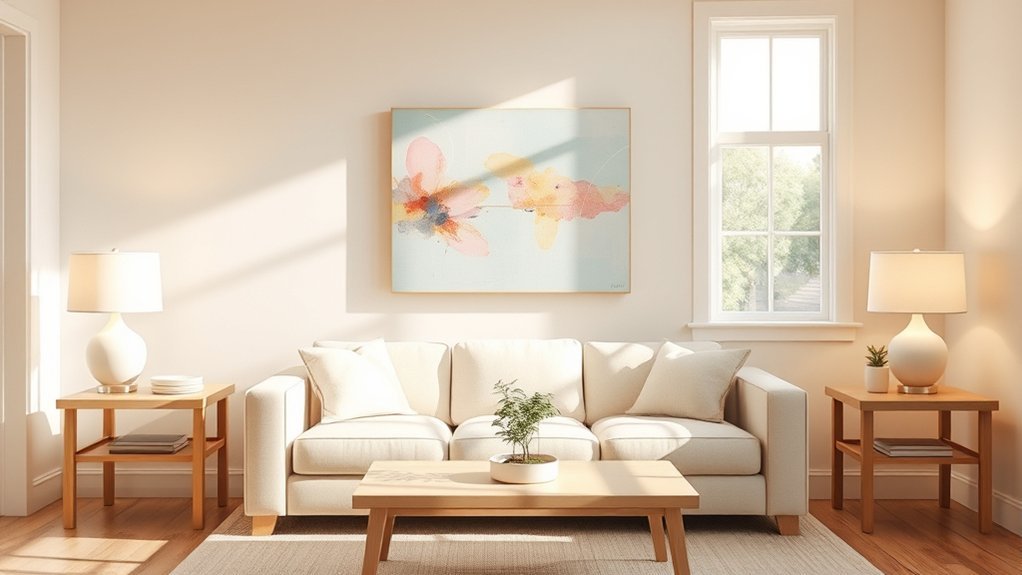
So, choosing light-colored decor can really make a difference, right? You might consider lighter wall shades or adding bright accent pieces—things that bounce light around the room. Do you think reflective surfaces, like glass or shiny furniture, could help boost that brightness even more?
Lighter Wall Shades
Choosing lighter wall shades might seem like a small change, but it can really make a difference in how bright your living room feels. Using light color palettes, like soft whites, creams, or pastels, helps reflect more light around the space. You might wonder if a fresh coat of paint is worth it, but wall paint techniques matter too. For example, matte finishes absorb light, so consider satin or eggshell finishes instead. Applying the paint with a roller in smooth, even strokes can avoid streaks that dull the brightness. If your walls are darker now, switching to light shades could instantly make the room seem bigger and more open. Do you want your living room to feel more airy without adding extra lighting? This simple update might be just what you need.
Bright Accent Pieces
Bright accent pieces can really change how your living room feels without a lot of fuss. Think colorful cushions on your sofa—bright yellows, soft pinks, or even pastel blues. They instantly add a splash of light and energy. Then, consider lively artwork on the walls—something bold but light in color, not dark and heavy. It draws the eye and makes the space feel more lively. Sometimes, a few well-chosen pieces make all the difference, right? You don't need to redecorate completely. Just swap out a few cushions or hang a cheerful print. Are you holding onto decor that’s dull or too dark? Maybe it’s time to pick brighter, lighter accents that lift the room’s mood. It’s simple, but it works.
Reflective Surface Use
If you want your living room to feel brighter, using reflective surfaces can really help. You could try adding reflective materials like glass or shiny metal decor. Mirrors are obvious, but even shiny picture frames or metallic vases work. The surface textures matter too—smooth, glossy finishes bounce more light around the room. Sometimes, textured surfaces can diffuse light, softening the glow, but if brightness is your goal, opt for sleek and shiny. Do you have any surfaces that could be upgraded? Maybe a coffee table with a glass top or wall art with a reflective finish? It’s all about playing with the light and surface textures to make the space feel more open and lively. Just small changes can make a big difference in how bright your living room feels.
Maximize Natural Light With Strategic Window Treatments
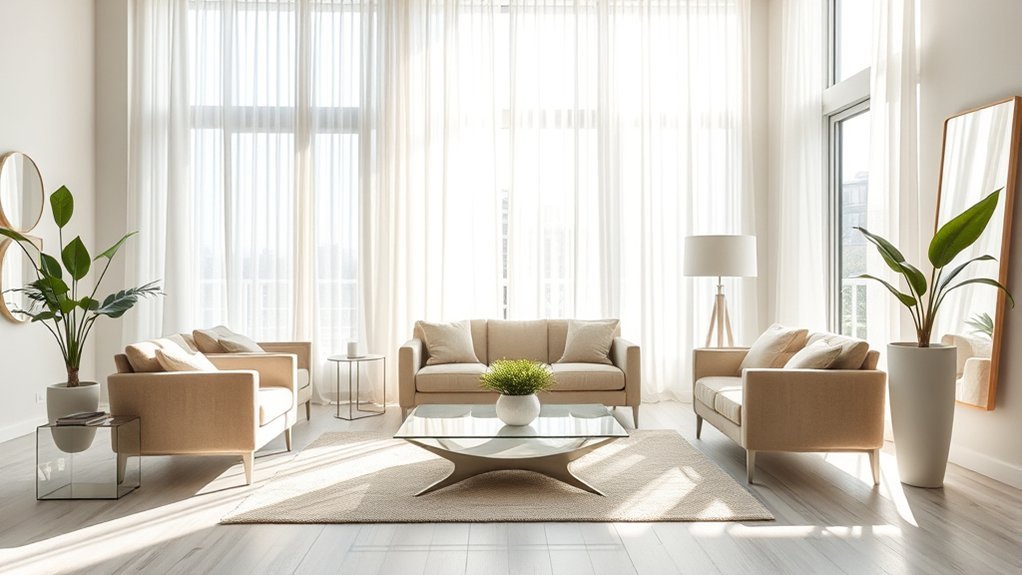
Sometimes, the way you treat your windows can make or break the amount of sunlight that fills your living room. Proper window placement matters—placing windows where sunlight hits naturally enhances brightness. Using light diffusion curtains or blinds helps spread light evenly, avoiding harsh shadows or glare. Here are some tips:
- Opt for sheer curtains that let in soft, natural light.
- Hang blinds high above the window frame to enlarge window size.
- Use light-colored, reflective window treatments to bounce light around.
- Consider angled or strategically placed windows to catch sunlight at different times of the day.
Think about how you use your space. Do certain areas need more light? Adjusting your window treatments can turn a dull room into a bright, inviting one.
Add Accent and Task Lighting for Specific Areas
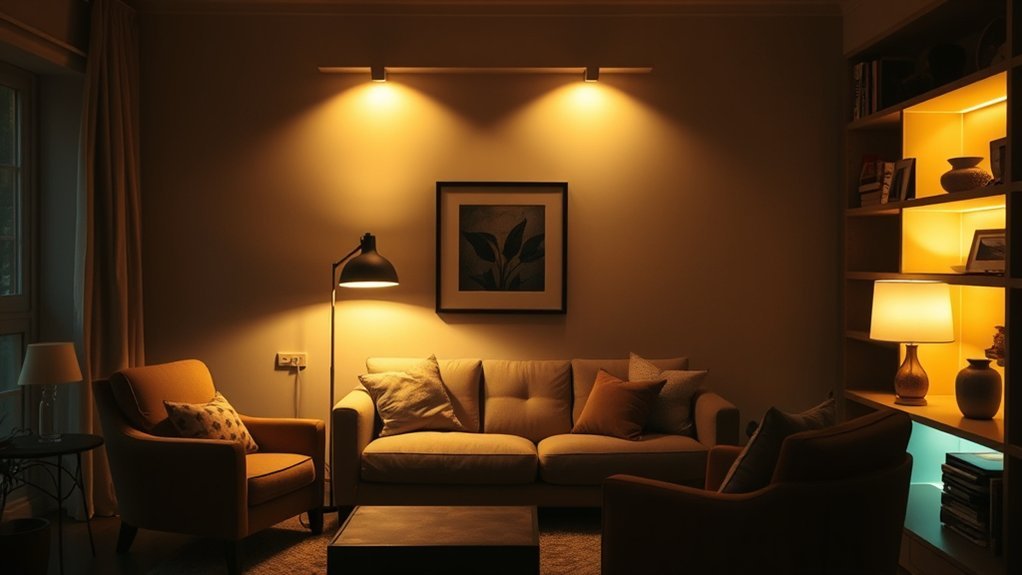
Adding accent and task lighting can really change how your living room feels—especially in those spots where natural light doesn’t reach quite enough or where you need focused illumination. Task lighting, like a reading lamp next to your favorite chair or a desk light, helps you see better when you’re working or relaxing. Accent lighting, on the other hand, highlights artwork, shelves, or architectural features, adding depth and interest. You might consider placing a small lamp on a side table or installing adjustable wall sconces. Do you notice dark corners or areas where shadows gather? That’s where these lights can make a difference. They’re not just about brightness, but about creating layers and zones that make your living room feel warmer and more inviting.
Utilize Light-Enhancing Accessories and Smart Bulb Options
Using light-enhancing accessories and smart bulbs can really give your living room a boost without a lot of fuss. Smart lighting is flexible—you can change brightness, color, or even set schedules. Here’s how to use them effectively:
- Use light diffusion lampshades or covers to soften harsh light.
- Install smart bulbs that allow you to adjust color temperature and brightness easily.
- Add reflective surfaces like mirrors or glossy décor to bounce light around.
- Incorporate accessories like lightweight curtains or diffusing panels that help spread light more evenly.
These simple tweaks can make your space feel brighter and more inviting. Do you really need overhead lighting, or can smart lighting and accessories do the trick? Sometimes, it’s about experimenting.
Frequently Asked Questions
How Can I Make My Living Room Feel Brighter Without Installing Overhead Lights?
To brighten your living room without overhead lights, enhance natural light by opening curtains, add mirrors to reflect it, and use light-colored furniture and décor for a more luminous feel. Mirrors placement amplifies brightness effectively.
What Are the Best Color Schemes to Maximize Natural and Artificial Light?
You should choose light, reflective colors based on color psychology, like soft whites and pastels, to enhance light reflection and make your living room feel brighter. These colors optimize both natural and artificial light effectively.
Which Types of Lamps Are Most Effective for Creating a Bright Ambiance?
You should use a mix of floor lamps and table lamps to create a bright ambiance. Choose ones with high lumen output and adjustable brightness to effectively illuminate your living room, even without overhead lighting.
How Can I Improve Lighting in Rooms With Small or Few Windows?
To improve lighting in rooms with small or few windows, you should use reflective surfaces like mirrors, opt for light-colored walls, and choose window treatments that enhance natural light, making the space feel brighter and more open.
Are There Specific Smart Bulbs That Enhance Brightness and Mood?
You’ll find that smart bulbs with adjustable brightness and color temperature are ideal for enhancing mood lighting and brightness. Look for features like dimming, color options, and voice control to create the perfect ambiance effortlessly.
Final Thoughts
So, yeah, lighting your living room without overheads isn’t impossible. Just mix lamps, mirrors, and light colors. Play around with placement—sometimes a small change can make a big difference. Think about how you use the space—do you need more task lighting or just cozy ambiance? It’s all about experimenting and seeing what feels right. Maybe you’ll discover your perfect setup over time. Or maybe not. Either way, it’s worth trying.