I’ve made a lot of chili over the years, and honestly, there’s something about a good, hearty beef chili that just sticks with you. It’s simple in ingredients but complex in flavor, especially if you get the spices right. Do you prefer it mildly seasoned or packed with heat? Sometimes, I wonder if everyone can agree on how much chili they want, or if it’s always about tweaking it just enough to make it your own.
The Essentials
- Use ground beef, onions, garlic, tomatoes, and beans as the core ingredients for authentic flavor.
- Brown the beef thoroughly and cook onions and garlic until aromatic before adding spices.
- Incorporate chili spices like cumin, paprika, and oregano, adjusting for heat with cayenne or hot sauce.
- Simmer the chili with crushed tomatoes and beans to meld flavors and achieve your desired consistency.
- Serve with toppings like cheese, sour cream, or cilantro, and customize spice levels for personal taste.
Essential Ingredients and Preparation Tips
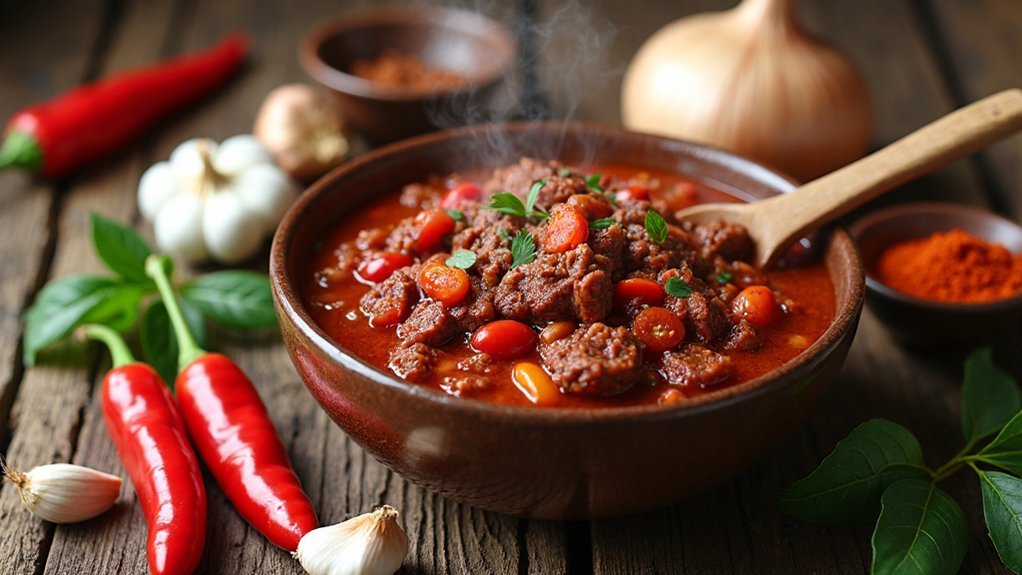
When I start making chili, I always make sure I have the essentials right on hand. The core ingredients are pretty straightforward—ground beef, onions, garlic, beans, and tomatoes. But the real magic comes from the chili spices. You need cumin, paprika, oregano, maybe a touch of cayenne. Sometimes I swap out spices, depending on what I have or what flavor I want—like using chili powder instead of all those separate spices. It's good to taste as you go, so you can adjust the seasoning. If you prefer milder chili, skip the cayenne or reduce it. Ingredient substitutions are fine; sometimes I use veggie broth instead of water or toss in a chopped bell pepper for extra flavor. The key is to keep it simple but flexible.
Step-by-Step Cooking Guide
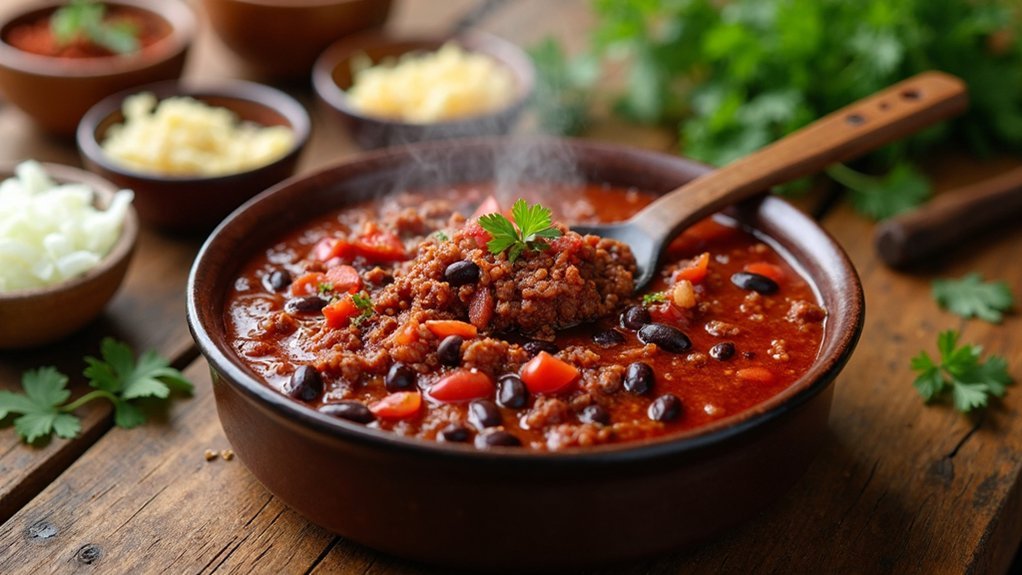
To get started, I usually warm up my pot over medium heat and toss in a little oil. Then, I add diced onions and garlic, cooking until they soften and release their aroma. This step is key for building a good flavor base. Next, I brown the ground beef, breaking it apart as it cooks. Cooking techniques matter here—you want it nicely browned, not steamed. Once the beef has some color, I toss in spices like chili powder, cumin, and paprika. These help develop the flavor profile I’m aiming for. Then, I add crushed tomatoes and beans, simmering gently. The trick is to let it cook long enough so the flavors meld. Do you keep it thick or more soupy? That choice really affects the final dish.
Variations and Serving Suggestions

There are so many ways to tweak beef chili depending on what you like or what you have on hand. You can add spicy additions like hot sauce, jalapeños, or a dash of cayenne powder if you want more heat. I often like topping my chili with shredded cheese, sour cream, or chopped cilantro—it makes a difference. Sometimes I toss in a squeeze of lime for brightness. Do you prefer a little kick, or maybe a milder version? Experimenting with toppings and spicy additions keeps it interesting. Plus, serving options vary—some like chili over rice, others with crusty bread or tortilla chips. It’s flexible, so why not customize it to suit your mood? What do you think makes chili feel personalized?
Final Thoughts
So, yeah, making this chili is pretty straightforward, but it’s also flexible. Feel free to adjust the heat, add more veggies, or try different toppings. It’s all about what you enjoy. Sometimes I wonder if I should toss in a little beer or switch up the beans. Do you ever experiment with your chili? Either way, I think the key is just tasting as you go and making it your own.