As you step into your home, you're immediately surrounded by the culmination of your design choices. But have you ever stopped to think about how those decisions are affecting your daily mood? From the brightness of the walls to the textures of your furniture, every element is influencing your emotional response. You might not even realize it, but the way you arrange your space can either energize or calm you down. So, what's the psychology behind creating a space that lifts you up and makes you feel like the best version of yourself?
The Essentials
- Color choice in home decor significantly impacts mood and behavior, with different hues evoking distinct emotional responses, such as energizing yellows and calming greens.
- Lighting design in homes affects emotional state throughout the day, with natural light exposure elevating mood and artificial light temperature influencing alertness and relaxation.
- Cluttered environments lead to decreased mental clarity, increased feelings of overwhelm, and wasted time, making organization crucial for clearer minds and enhanced well-being.
- Texture incorporation in home design influences emotional reactions, with soft textures promoting comfort, rough textures evoking different sensations, and varied textures enhancing emotional impact.
- The layout and organization of living spaces significantly influence feelings of navigation, ease, and harmony, with balanced and harmonious zones creating calming atmospheres and promoting relaxation.
The Power of Color
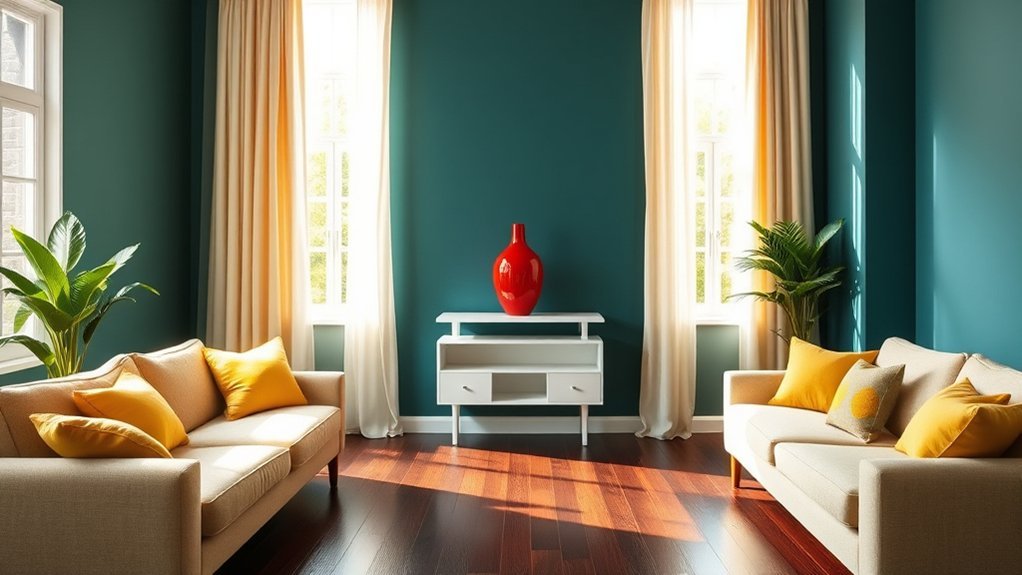
When you step into a space, what's the first thing that grabs your attention? Chances are, it's the colors surrounding you. Color psychology plays a significant role in evoking emotional responses. You might feel energized in a room painted with bright yellows or calm in a space dominated by soothing greens. The colors you choose for your home can influence your mood and behavior. For instance, if you're struggling with anxiety, you might want to incorporate more blues and whites into your decor, as these hues are known to promote a sense of calmness. So, the next time you're thinking of repainting a room, remember, the shade you pick can have a profound impact on your emotional well-being.
Lighting Up Your Mood
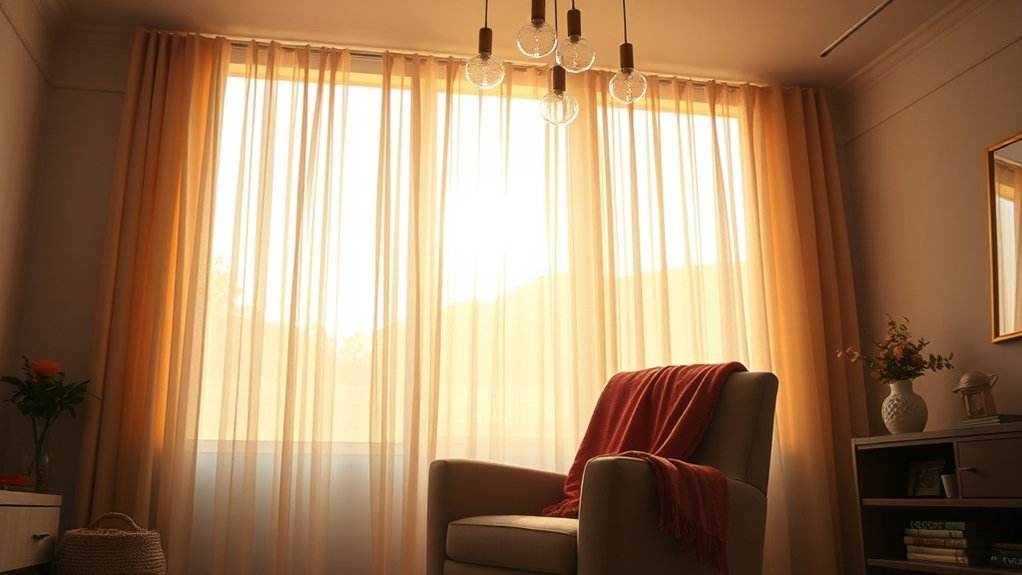
You're probably familiar with how a bright, sunny day can lift your mood - and it's not just about the vitamin D. The way you design your home's lighting can have a significant impact on your emotional state, from the moment you wake up to the moment you wind down. What if you could harness that mood-boosting power, even on cloudy days or in rooms with limited natural light?
Natural Light Boost
About 20% of your day is spent indoors, which is a significant chunk of time considering how much it affects your mood. It's amazing how much sunlight exposure can elevate your mood, isn't it? You might be thinking, "What's the big deal about natural light?" But the truth is, it has a profound impact on your daily mood. Natural light has the power to lift your spirits, making you feel more energized and focused. By incorporating more natural light into your daily routine, you'll start to notice a significant shift in your overall well-being. So, take a moment to rethink your space and ask yourself: Are there any areas in your home where natural light is being blocked?
Color Temperature Matters
Two thirds of your day is spent under artificial lighting, which can have a profound impact on your mood. So, it's no surprise that the color temperature of your lamps and fixtures matters. You're probably familiar with the cozy, warm hues of traditional incandescent bulbs, but have you considered the energizing effects of cool tones? Those blue-ish lights can actually help increase your alertness and productivity. On the other hand, warm lighting can promote relaxation and reduce stress. It's worth thinking about how you want to feel in different spaces – do you want to feel energized in your home office or relaxed in your bedroom?
Artificial Light Options
Now that you've considered the mood your lighting can create, it's time to explore the options available to create that mood. LED alternatives offer energy savings, and you can use them for ambient brightness or task lighting. But what about mood lighting? You can use color filters to create a certain atmosphere. And with smart controls, you can adjust the lighting to fit your needs. Light dimmers are a great way to customize the brightness. You can also choose from a variety of fixture styles to fit your decor. Don't forget about light placement - where you put your lights can greatly affect the mood. Are you using lights to create a cozy reading nook or a bright and energizing workspace?
The Impact of Clutter
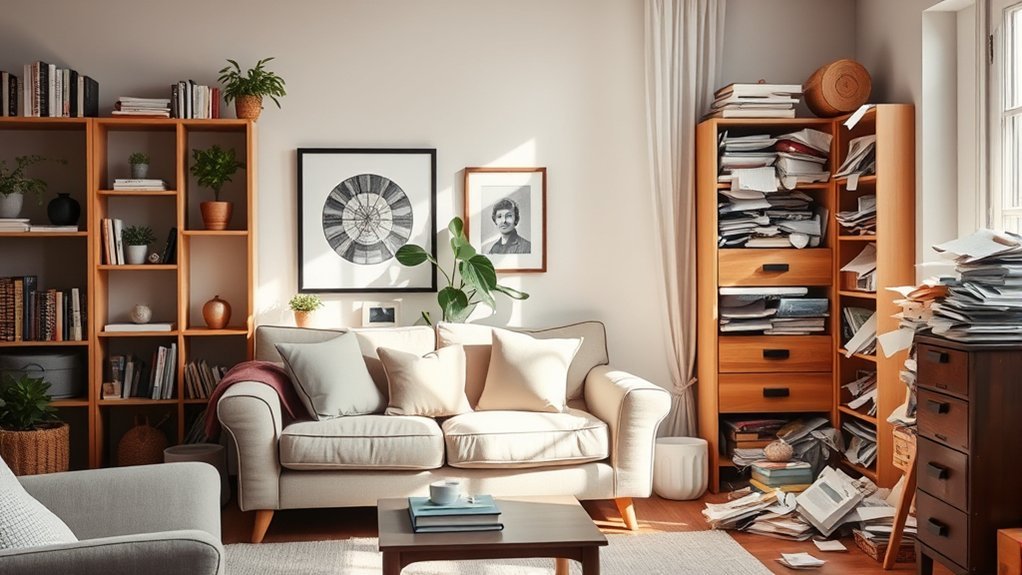
If you're like most people, you've got some degree of clutter in your home - maybe it's a few piles of papers on your desk, or a closet that's bursting at the seams. Cluttered environments can have a significant impact on your mental clarity. When your space is disorganized, you're more likely to feel overwhelmed and stressed. You might find yourself wasting time searching for things you can't find, or feeling guilty about not being able to keep your space tidy. But what if you took control of the clutter? What if you took the time to sort through those piles and organize your closet? You might be surprised at how much clearer your mind feels when your space is organized.
How Texture Affects Emotions
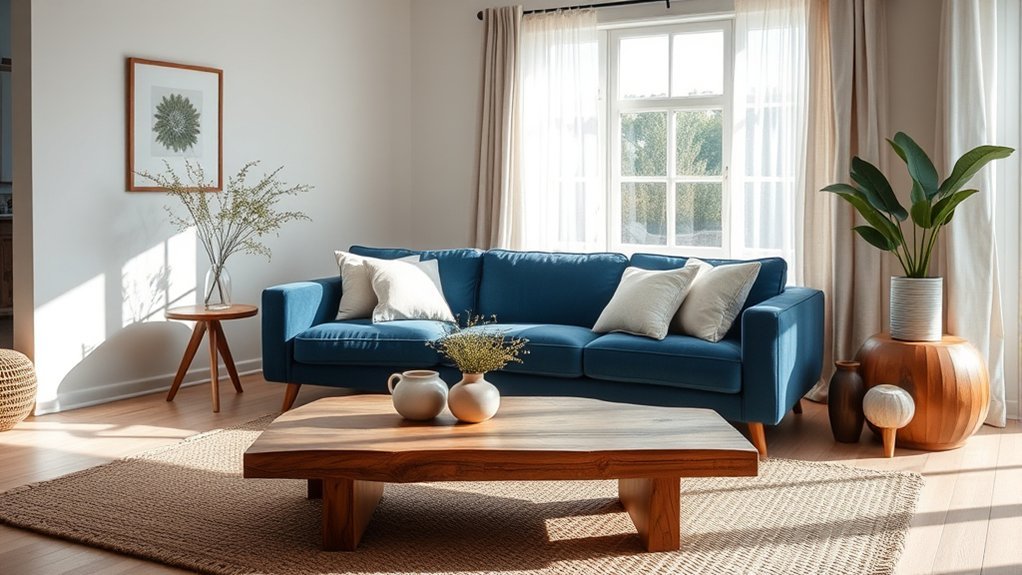
You're probably familiar with the sensation of walking into a room and feeling immediately at ease, or, conversely, entering a space that makes you want to turn right back around. That's because texture plays a significant role in shaping our emotions. Think about it:
- Soft, plush carpet under your bare feet after a long day
- Rough, cold concrete beneath your palms on a summer morning
- Velvety smooth couch cushions enveloping you in comfort
- Coarse, rustic wood beneath your fingers as you run your hand along a table edge
- Silky, smooth sheets enveloping you in relaxation
Textural contrasts can evoke strong emotional responses, often subconsciously. By incorporating varying tactile experiences, you can intentionally create spaces that promote relaxation, energy, or calmness. What kind of textures do you want to surround yourself with?
The Psychology of Space Layout
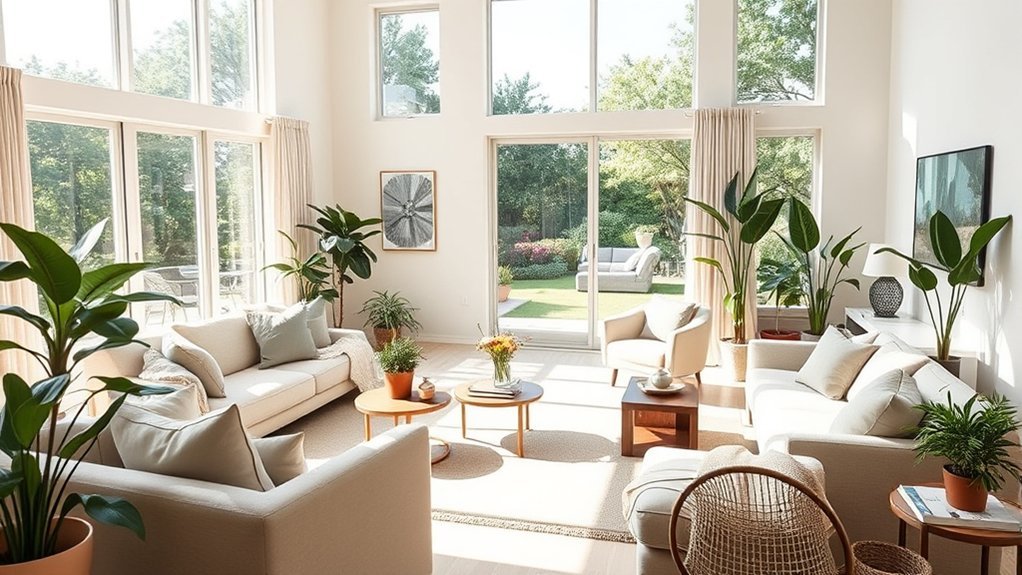
You're probably aware that the way you organize your living space can greatly impact how you feel when you're in it. When you think about it, you likely want your home to feel welcoming and easy to navigate, and that's where the flow of traffic patterns comes in - it's all about creating a sense of ease and convenience. By creating balance and harmony zones, you can create a space that truly feels like your own.
Flow of Traffic Patterns
As you step into a well-designed space, the flow of traffic patterns becomes almost intuitive, guiding you effortlessly from one area to the next. You move through the space with ease, never feeling stuck or unsure of where to go next. This is because the designer has carefully considered the traffic flow, creating movement patterns that make sense for the way you live.
- You walk in the front door and immediately see a place to put down your bag and keys.
- The path to the kitchen is clear, making it easy to grab a glass of water or start cooking dinner.
- You can easily move from the living room to the dining area, without feeling like you're walking through a narrow tunnel.
- The hallway to the bedrooms is wide enough for two people to pass each other comfortably.
- The flow of the space feels natural, like you can't imagine it being designed any other way.
Balance and Harmony Zones
Because a well-designed space can evoke feelings of calmness and relaxation, it’s essential to understand how balance and harmony zones work together to create an atmosphere that makes you feel at ease. You see, symmetrical arrangements can create a sense of order, but they can also feel a bit too perfect, a bit too rigid. That's where harmonious elements come in – they add a touch of softness, of humanity, to the space. When you combine these two elements, you get a space that feels balanced and harmonious. But how do you achieve this balance? Do you prioritize function or form? Do you try to find a middle ground? The key is to experiment and find what works for you.
Nature-Inspired Calm
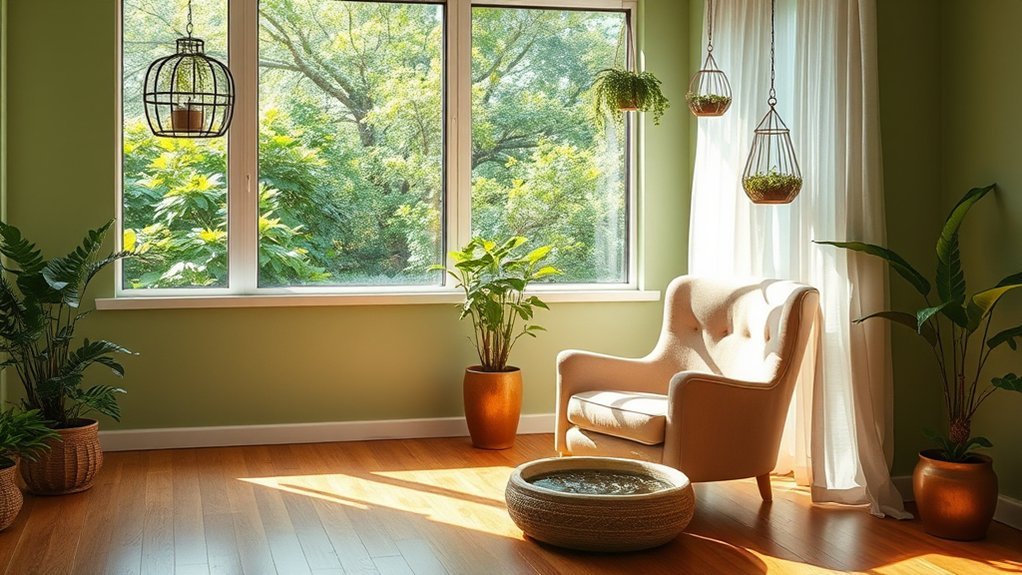
If you've ever stepped into a forest, you know that sense of calm that washes over you - it's as if the trees are exhaling slowly, and their tranquility is seeping into your pores. You can recreate this nature-inspired calm in your home by incorporating elements that evoke the great outdoors.
- The scent of fresh earth and greenery, reminiscent of a spring morning
- The soft, filtered light that passes through leaves
- The sound of a gentle stream, or even just the quiet hum of a fan
- The tactile sensation of rough tree bark or smooth river stones
- The subtle, calming colors of moss, sage, and sandy beige
The Art of Visual Balance
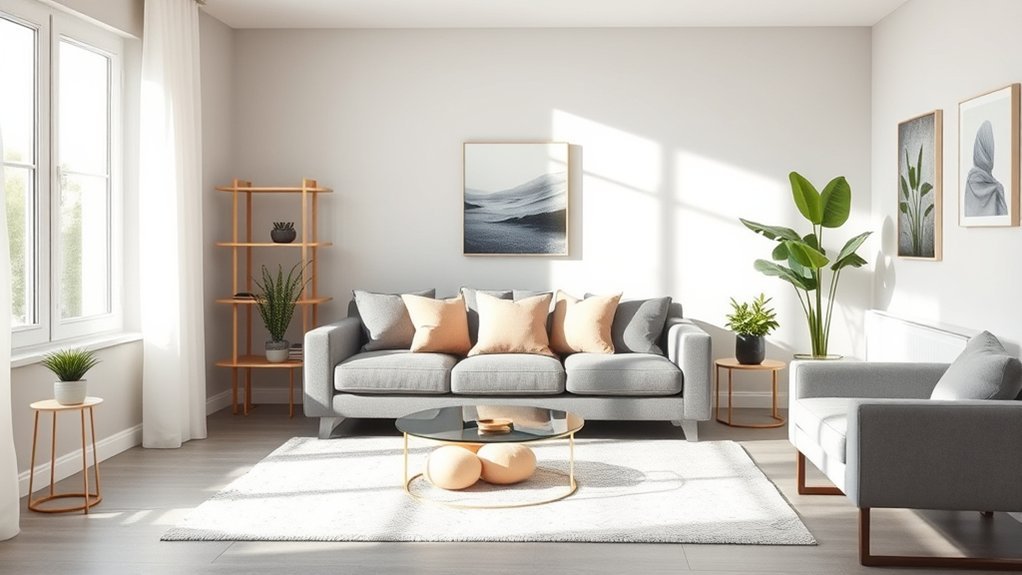
You're probably familiar with the sensation of being in a space that feels just right - not too cluttered, not too sparse. That's because our brains are wired to respond to visual balance. When a room is balanced, our eyes move smoothly around the space, taking in the details without getting stuck on any one thing. It's all about applying symmetry principles and creating a visual hierarchy. Think of it like a gentle flow of energy. You want to guide the viewer's eye through the room, from one focal point to the next. Ask yourself, what do you want to draw attention to? By balancing the visual elements, you create a sense of harmony, making the space feel more welcoming and relaxing.
Frequently Asked Questions
Can a Well-Designed Home Improve Mental Health?
You can boost your mood by creating a space that works for you, using color psychology to calm your mind and spatial awareness to optimize flow, ultimately improving your mental health through thoughtful design choices.
Do Minimalist Spaces Lead to Increased Productivity?
You'll find that embracing minimalist spaces can spark a productivity boost, as clutter-free environments help you focus and prioritize tasks, allowing you to accomplish more in less time, and ultimately, reaping the minimalist benefits.
Can Certain Scents Affect My Mood at Home?
You've discovered that certain scents can certainly affect your mood, and you're curious about tailoring scent preferences for mood enhancement. By incorporating uplifting aromas, like lavender or citrus, into your daily routine, you'll be amazed at how they can boost your mood and energy levels.
Do Pets Influence My Home’s Emotional Atmosphere?
You're likely aware that having a pet can boost your mood, but did you know that pet ownership deepens emotional bonding, creating a sense of comfort and companionship that positively influence your home's emotional atmosphere?
Can Home’s Design Style Reflect My Personality?
You curate a space that echoes your personality, from color preferences that energize or soothe you, to savvy space utilization that streamlines your daily routine, ultimately reflecting the authentic you.
Final Thoughts
As you step into your space, you're not just seeing walls and furniture - you're experiencing a symphony of emotions. By tweaking the colors, lighting, and textures, you're fundamentally rewriting your daily mood. So, what kind of story do you want to tell? Do you crave calmness or energy? By thoughtfully designing your home, you're not just decorating - you're shaping your emotional well-being. And that's a powerful thing.